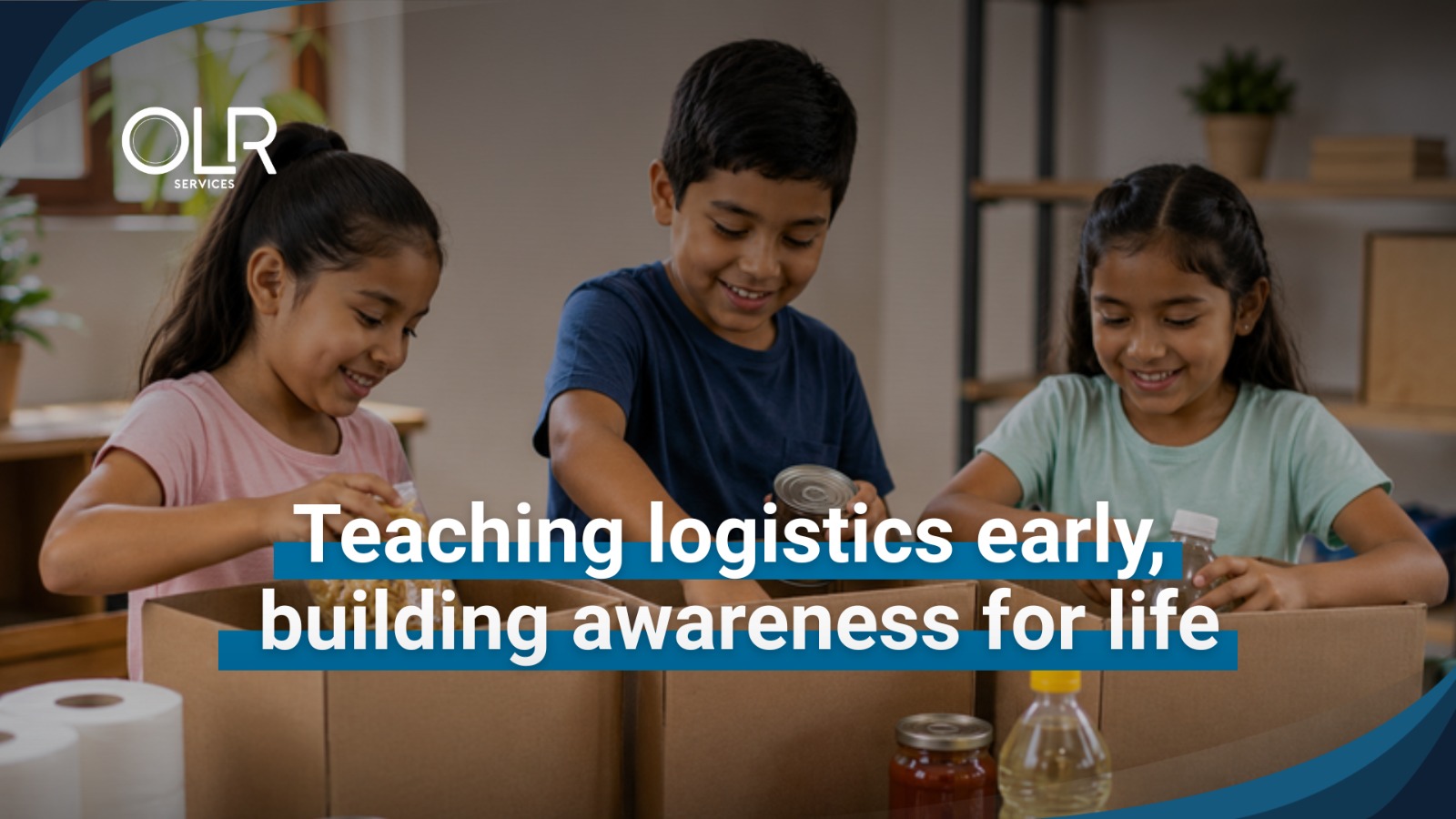
Teaching kids about logistics at a young age helps them understand processes, teamwork, problem-solving, and how everyday systems work. Learn why logistics education matters early.
Most people do not think about logistics until they need something delivered, moved, stored, or organized. But the truth is, logistics is woven into everyday life. It is behind the food on supermarket shelves, the school supplies that arrive on time, the packages delivered to a front door, and the systems that keep businesses and communities running.
That is exactly why teaching kids about logistics at a young age matters.
This is not about pushing children toward a future career in supply chain or warehousing. It is about helping them understand that the world works through coordination, people, processes, and planning. When children begin to recognize that everyday life depends on systems working together, they develop a deeper awareness of how things happen and why each step matters.
What Is Logistics for Kids to Understand?
At its core, logistics is the process of moving, storing, organizing, and delivering things in the right way, at the right time, and to the right place.
For adults, that may sound like a business function. For children, it can be explained much more simply: logistics is how things get where they need to go.
That includes:
- how groceries arrive at stores
- how school lunches are prepared and delivered
- how toys or clothes ordered online reach a home
- how supplies get from one place to another
- how many people work together behind the scenes
When kids understand logistics in these everyday examples, the concept becomes real. It is no longer abstract. It becomes part of how they make sense of the world around them.
Why It Is Important to Teach Logistics at a Young Age
Children are naturally curious. They ask where things come from, how they are made, and why certain things happen the way they do. Logistics answers many of those questions.
Teaching children about logistics early helps them see that things do not simply appear. There is always a process. There are people involved. There are decisions being made. There are steps that must happen before something reaches its destination.
That awareness is valuable because it encourages children to think beyond the final result. Instead of only seeing the package at the door or the product on the shelf, they begin to think about what happened before that moment.
That shift in thinking matters. It helps children become more observant, more thoughtful, and more aware of the systems that support everyday life.
Teaching Logistics Helps Kids Understand Processes
One of the most important developmental benefits of learning about logistics is process awareness.
Logistics depends on sequence. Goods need to be packed before they are shipped. Items need to be received before they are stored. Deliveries need to be organized before they can be completed. Timing, order, and follow-through all matter.
When children begin to understand this, they also begin to understand something bigger: outcomes depend on preparation.
This helps them develop skills such as:
- planning ahead
- following steps in order
- understanding cause and effect
- recognizing how one stage affects the next
- thinking more clearly about how things work
These are not just logistics skills. They are life skills.
Children who learn to think in processes often become better problem-solvers because they understand that good results usually come from organized effort, not chance.
It Builds Respect for the People Behind Everyday Systems
Another reason logistics education matters is that it shows children how many people contribute to what they use every day.
Behind a single product, there may be warehouse teams, truck drivers, inventory planners, port workers, dispatchers, customer support staff, suppliers, and many others. Logistics helps children see that convenience is supported by real people doing real work.
That lesson is powerful.
It teaches respect for labor, appreciation for teamwork, and a more grounded understanding of how daily life is made possible. It also helps children understand that success often depends on many different roles working together, not just one visible person at the end of the process.
In a world where so much happens behind the scenes, that kind of awareness can help children become more empathetic and more respectful of others’ contributions.
Logistics Encourages Problem-Solving and Adaptability
Logistics is full of practical questions.
How do we move something safely?
How do we get it there on time?
What happens if there is a delay?
What if something changes at the last minute?
These questions are excellent for children because they introduce real-world problem-solving in a way that feels concrete and understandable.
Teaching logistics to kids helps them see that problems are often solved through:
- observation
- preparation
- teamwork
- communication
- flexibility
This strengthens adaptability, which is one of the most valuable skills a child can develop.
Instead of seeing challenges as dead ends, children can begin to understand that many problems can be worked through by adjusting the plan, thinking ahead, and collaborating with others.
It Helps Kids See How the World Works
One of the most overlooked benefits of teaching logistics is that it gives children a broader view of the world.
It helps them understand that businesses, cities, schools, hospitals, and stores all depend on movement, timing, and coordination. It connects the dots between local routines and larger systems.
That awareness can also spark interest in other areas of learning, including:
- geography
- math
- communication
- business
- engineering
- technology
Logistics naturally touches many disciplines because it is about how systems connect.
For children, that can be exciting. It opens the door to curiosity. They may begin to notice routes, schedules, storage, transportation methods, and how different people and places are connected.
This kind of systems thinking is useful not only in education, but in life.
Teaching Logistics Can Foster Responsibility and Patience
We live in a world where many things feel instant. Children often grow up surrounded by fast answers, fast delivery, and immediate results. Logistics offers an important counterbalance to that mindset.
It shows that good outcomes often depend on preparation, timing, and coordination.
Teaching children this idea can help them develop more patience and responsibility. They begin to understand that every process has stages, and that skipping steps can affect the result.
Even simple daily routines can become early logistics lessons:
- packing a backpack the night before school
- organizing materials for a project
- preparing for a family trip
- sorting items before putting them away
- following a checklist to complete a task
These small habits teach children how planning supports success. Over time, that builds confidence and independence.
Why Logistics Awareness Matters for the Next Generation
Children do not need to understand logistics in technical terms to benefit from it. What matters is giving them a basic awareness of how goods move, how systems function, and how people work together to make things happen.
That kind of understanding prepares them for more than just future work. It prepares them to think more clearly, act more responsibly, and appreciate the effort behind the world they experience every day.
In many ways, logistics teaches a deeper lesson: things work best when people, processes, and timing are aligned.
That is a concept children can carry into school, relationships, work, and daily life.
Final Thoughts: Teaching Kids About Logistics Is Really About Teaching Awareness
When we teach kids about logistics, we are not only teaching them about warehouses, trucks, or deliveries.
We are teaching them that:
- things happen through process
- people depend on one another
- teamwork matters
- preparation matters
- the world runs on coordination, not coincidence
That is why introducing logistics at a young age can have such a meaningful impact.
It helps children become more aware of how everyday life works. It gives them practical ways to think about responsibility and organization. And it helps them appreciate the many people and moving parts behind even the simplest routines.
In the end, teaching logistics to children is really about helping them see the world more clearly.
And that is a lesson worth learning early.